
Notice: Prevented SiteOrigin layout from repeated rendering. in /home/rockybbf/giki.opusbywire.com/wp-content/plugins/siteorigin-panels/inc/renderer.php on line 668
What is reflux (GER) and GERD?
Reflux and GERD in Infants
It’s not uncommon for a baby to reflux – otherwise known as spitting up. The majority of infants do reflux during their first year of life, and most of them are completely healthy.
If your baby is growing properly and has a generally good disposition, then infant acid reflux is not a problem.
If, however, you have a fussy baby who is showing symptoms of pediatric GERD, such as poor feeding, vomiting, irritability, and breathing problems, consult your pediatrician as soon as possible. In many instances, simple lifestyle changes can alleviate GERD and turn a fussy baby into a very content child. Medication may also be an option in certain cases.
The important thing to realize is that with treatment, severe reflux and GERD can improve. A pediatrician or a pediatric gastroenterologist can help your child, and can offer you strategies for coping with GERD. Once your baby’s GERD is under control, he or she should enjoy a happy, healthy childhood.
Pediatric Acid Reflux and GERD in Children and Teens
When a person eats, food moves from the mouth down the esophagus and into the stomach. Once the stomach begins digesting the food, it passes into the small intestine.
Gastroesophageal reflux (GER) occurs when food and stomach contents move back up into the esophagus. Gastroesophageal reflux disease (GERD) develops when that continued backflow causes damage to the esophagus or interferes with sleeping, eating, development, or growth. Although GER (reflux) and GERD are often used interchangeably, they are not the same.
How common is reflux and GERD?
GER occurs in most otherwise healthy infants. Up to 50% of infants will show some sign of GER such as spitting up daily. Most of those children do not have GERD.
GERD is more common in infants who were born early, have a condition that affects their breathing such as cystic fibrosis or bronchopulmonary dysplasia, have an opening in their diaphragm called a hiatal hernia, have a neurologic impairment, or have had a repaired birth defect in their esophagus called an esophageal atresia.
Nearly 10 percent of teens and pre-teens in the United States are affected by gastroesophageal reflux or reflux disease (GERD). That is a significant number of young people.
Most children and teens with acid reflux are able to lead normal, active, healthy lives. With lifestyle adjustments and other treatments, they will likely find that they can continue doing the things they enjoy—whether that is participating in sports, playing music, going to summer camp, or spending time with friends. Pediatric acid reflux disease does not have to limit their life.
What are the symptoms of reflux (GER) and GERD?
Symptoms of reflux (GER) and GERD in infants
If your baby is spitting up, but otherwise seems content and healthy, you probably don’t need to worry about GER or GERD. But if your baby is fussy, failing to gain weight, or showing other signs and symptoms, consult your pediatrician.
- Vomiting
- Coughing
- Irritability
- Poor feeding
- Poor growth
- Breathing problems
All of these symptoms can be caused by disorders other than GERD. Your pediatrician will be able to make a final diagnosis. If your child is experiencing these symptoms, discuss them with your family doctor or find a pediatric gastroenterologist near you.
Symptoms of reflux (GER) and GERD in teens
GERD symptoms in kids and teenagers include:
- Hoarseness
- Frequent regurgitation (stomach contents go into the mouth and are swallowed again)
- Difficult or painful swallowing
- Coughing
- Wheezing
- Recurrent pneumonia
If your teen is experiencing these symptoms, discuss them with your family doctor or find a pediatric gastroenterologist near you.
What are “red flag” symptoms that suggest something other than GERD?
Call your pediatrician immediately if you notice any of the following “red flag” symptoms:
- Fever
- Lethargy
- Weight loss
- Rounded or firm soft spot on the head
- Seizures
- Persistent forceful vomiting
- Vomiting at night (when not being fed)
- Green or yellow color to the vomit
- Chronic diarrhea
- Abdominal distention
- Blood noted in diaper
- Breathing problems
How are GER and GERD diagnosed?
How is reflux (GER) diagnosed?
A doctor diagnoses reflux by asking questions to obtain a complete history of the infant or child and by completing a physical examination to rule out “red flags” and signs of GERD.
How is GERD diagnosed in infants?
If your doctor suspects your baby’s acid reflux has triggered GERD, he or she will run tests to confirm the diagnosis. Tests may include:
- Blood or urine tests
- pH monitoring, to test the level of acidity in the infant’s esophagus
- Upper endoscopy, in which a small camera is inserted into the baby’s esophagus (this is rarely required to make a diagnosis)
How is GERD diagnosed in children and teens?
When a teen goes to the doctor, they’ll get a physical examination, and the doctor will ask about symptoms. Sometimes the doctor will also recommend tests to determine whether reflux is causing the symptoms. These tests check the esophagus, stomach, and small intestine to see if there are any problems. Common tests include:
- X-Rays: Barium (a chalky drink) is swallowed, and X-rays show the shape of the esophagus and stomach.
- Endoscopy: The patient receives medication so they are asleep. Then, a small flexible tube with a very tiny camera is inserted through the mouth and down into the esophagus and stomach. The doctor can examine the lining of the esophagus, stomach, and part of the small intestine. If necessary, the doctor can also take small pieces of the lining (biopsies) that will be examined under a microscope for inflammation and other problems. This procedure is painless for the patient.
- Esophageal pH Probe: A thin light wire with an acid sensor at its tip is inserted through the nose into the lower part of the esophagus. The probe can detect the amount of stomach acid coming up into the esophagus and can tell if there is acid in the esophagus.
How are reflux and GERD treated?
Treatment and Management of Reflux & GERD in Infants
We recommend treating GERD in a stepwise fashion:
- First-line treatment includes avoiding overfeeding (reduce the amount at each feeding), feeding more often, and/or using thickening formula with rice cereal.
- What about arsenic in rice—should I use oatmeal? Since 2016, the FDA has set limits on the amount of arsenic allowed in infant rice cereal. Rice cereal dissolves thoroughly, is affordable, and does not clog the bottle. Using rice cereal with low or no arsenic is recommended.
- Carob bean (also called locust bean) thickeners are approved for use in infants after 42 weeks gestation and can be used in breast milk.
- Second-line treatment includes removing cow’s milk from your baby’s diet (or from mom’s diet if the baby is breast-fed). This is usually done with a protein hydrolysate or amino acid-based formula for 2–4 weeks.
- Third-line treatment is referral to a pediatric gastrointestinal provider for further evaluation. If this is not possible, a 4–8-week trial of acid suppression is recommended. If symptoms improve, medication is then slowly stopped to see if symptoms return.
Lifestyle adjustments can be extremely effective in reducing acid reflux and treating GERD in babies. In fact, many babies don’t need medication if you use these strategies for managing reflux and treating GERD:
- Avoid overfeeding
- Don’t feed the baby again after he or she spits up (wait until the next feeding time)
- Check with your doctor to see if you are using appropriately sized bottles or nursing the appropriate amount of time.
- If your baby is formula-fed, thicken the formula with a small amount of rice cereal
- Keep the baby upright for at least 30 minutes after a feeding
- Try not to let your baby spend too much time in a car seat (the baby’s position in the car seat can promote reflux)
- Avoid tight diapers and elastic waistbands
Most infants with reflux or GERD will be helped with the treatment mentioned above. If symptoms are severe or persistent, then your primary care provider may consider treatment with a medication or referral to a pediatric gastroenterologist.
Treatment and Management of Reflux & GERD in Children and Teens
If a child or teen is one of the millions living with GERD, they can be reassured that there are many effective ways to treat and manage the condition. In fact, many young people with GERD find that they do not need to rely on medication once they make certain changes to their diet and lifestyle.
Helpful Suggestions for Managing GERD in Kids and Teens:
-
Eat smaller meals more often.
-
Limit foods that are spicy or high in acid (such as pickles, tomatoes, and citrus fruits).
-
Drink plenty of water when symptoms arise.
-
Avoid drinking alcohol.
-
Avoid cigarettes and all types of tobacco smoke.
-
Avoid carbonated drinks, chocolate, caffeine, and foods that are high in fat (for example, pizza and french fries).
-
Elevate the head of the bed about 30 degrees using books or blocks.
-
Avoid wearing tight waistbands.
-
Try to lose weight if above an ideal weight, with guidance from a healthcare provider.
-
Avoid eating or drinking 2–3 hours before bedtime.
-
Avoid eating large meals before periods of heavy or stressful activity.
Medications for GERD
Sometimes, diet and lifestyle changes are not enough to control GERD. In those cases, a doctor may recommend medication. Medicines for reflux and GERD are designed to reduce the amount of acid the stomach produces. A doctor may prescribe one of several options. Some of the most common include:
-
cimetidine (Tagamet)
-
ranitidine (Zantac)
-
famotidine (Pepcid)
-
nizatidine (Axid)
-
esomeprazole (Nexium)
-
omeprazole (Prilosec)
-
lansoprazole (Prevacid)
-
rabeprazole (Aciphex)
-
pantoprazole (Protonix)
(There is no need to memorize those names.)
If symptoms do not improve while taking medication, a doctor may recommend additional testing to help determine the most effective treatment. In very rare cases, surgery may be considered.
For children and teens living with GERD, it is important to remember that many treatment options are available. With the guidance of a doctor, most young people are able to manage their symptoms and feel better.
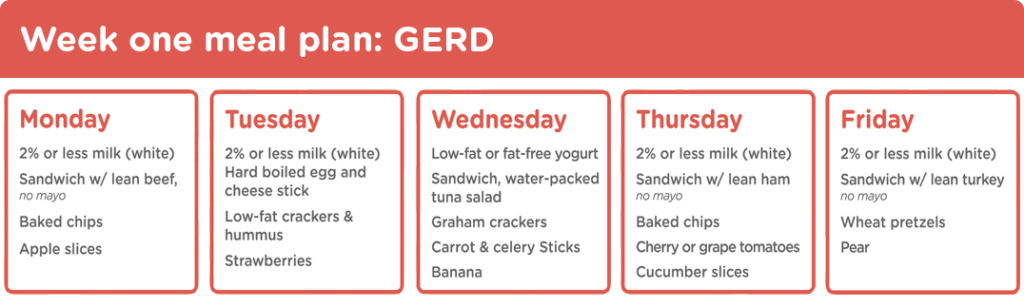
What are some healthy & enjoyable lunches I can prepare for my child with GERD?
Do you struggle with preparing healthy & enjoyable lunches for your child with GERD? We have you covered with 5 days of lunch options developed by our dietitian to make your mornings easier.
How can families cope with GERD and Reflux?
Coping with Your Baby’s Reflux or GERD
New parenthood is always a stressful time, but if you have a baby with severe acid reflux and/or GERD, you may find yourself under extreme strain. Dealing with a fussy baby, or an infant who seems to be crying inconsolably can make even the most loving parent very frustrated.
Parents and caregivers of infants with pediatric GERD are likely to experience sleep loss, as well as psychological and physical stress until they find effective treatment for the baby’s reflux or GERD. This stress can have a ripple effect throughout the caregiver’s daily life, putting stress on professional activities, family relationships, and everyday social interactions.
Remember, to give your baby the best care, you also need to care for yourself. The effect on the caregiver can be profound and affect all aspects of their normal routine from sleep, and professional activities to family relationships and normal social interactions.
The NASPGHAN Foundation has developed a Coping Guide to assist you when there is any indication that these conditions may be affecting your life.
Where can I find support for myself and my family to help cope with GER and GERD?
- Know you are not alone.
- All babies cry. The average 6-week-old baby fusses or cries for more than 1 hour per day, with up to 35% of babies fussing for more than 2 hours per day. This improves as babies get older. By three months of age, most babies cry less than 1 hour per day. Not all crying or fussing is related to GER or GERD.
- Establish good sleep habits for you and your baby. If possible, nap when they nap. Talk to your pediatrician to find sleep strategies that will work for you and your family.
- Ask for help. While help may not always be available, if you have someone who can help, consider asking them to relieve you for a few hours or help with a night feeding.
- No one is a perfect parent. There may be times when you cannot figure out how to comfort your child. Parenting is about trial and error. What works for one family may not work for yours. It’s okay to put your baby down for 5–10 minutes to see if they can calm themselves.
- Make time for your family. Coping with reflux is a team effort, and everyone in the family needs to feel seen and heard. Spend time with older children, and let them express their feelings about having a new baby who may need more attention. Spend time with your partner (or friends).
- Take care of yourself. Try to find 30 minutes a day when you can focus on you.
- If you have any of the following symptoms, please talk to your provider or a mental health professional about postpartum depression:
- Tearfulness, fatigue, insomnia (trouble sleeping), and feelings of loss that last for more than 10 days after your child’s birth
- Two weeks or more of any of the following:
- Crying more
- Having little energy to care for yourself or your baby
- Feeling down and/or hopeless
- Having little interest in previously enjoyed activities
Coping with Reflux or GERD in Teens
It is never easy for a child or teen to learn that they have an illness. After being diagnosed with acid reflux disease or GERD, they may feel afraid, sad, nervous, or simply “different.” These feelings are completely normal. However, a parent or doctor should be informed if they begin to experience any of the following:
-
Difficulty sleeping
-
Overwhelming sadness and/or frequent crying
-
Lack of interest in usual activities and hobbies
These can be signs of stress or depression, which can become serious if not addressed. Children and teens should be encouraged to talk with their parents and friends about their feelings and to ask for help when they need support in managing their emotions.
Remember:
-
It is normal to feel sad or anxious about GERD.
-
Most children and teens with GERD lead normal, active lives.
-
Talking about feelings with a parent or doctor can help.
-
Conversations with a doctor are confidential and private; information is not shared without permission (except in situations involving safety).
-
Children are different for many reasons—each child is valued just as they are.
Sources
Lightdale, J. R., Gremse, D. A., & Section on Gastroenterology, Hepatology, and Nutrition (2013). Gastroesophageal reflux: management guidance for the pediatrician. Pediatrics, 131(5), e1684–e1695. https://doi.org/10.1542/peds.2013-0421
Rosen, R., Vandenplas, Y., Singendonk, M., Cabana, M., DiLorenzo, C., Gottrand, F., Gupta, S., Langendam, M., Staiano, A., Thapar, N., Tipnis, N., & Tabbers, M. (2018). Pediatric gastroesophageal reflux clinical practice guidelines: Joint recommendations of the North American Society for Pediatric Gastroenterology, Hepatology, and Nutrition and the European Society for Pediatric Gastroenterology, Hepatology, and Nutrition. Journal of Pediatric Gastroenterology and Nutrition, 66(3), 516–554. https://doi.org/10.1097/MPG.0000000000001889
Author: Jordan Trotter-Busing, NP
Editor: Christine Waasdorp Hurtado, MD, MSCS, FAAP
March 2023